
The Hidden Cost of Chasing the Perfect Body
Written by Sophie Lamb
Social media is an incredible thing.
It inspires us, connects us, educates us, and introduces us to people and ideas we might never have discovered otherwise.
But like many things, it comes with a downside.
As a personal trainer, I spend a lot of time on social media. It's part of my job. And one thing I've noticed is just how quickly our feeds become filled with messages about how our bodies should look.
Within seconds of opening an app, we're shown toned stomachs, sculpted glutes, dramatic before-and-after photos, weight loss injections, anti-ageing treatments, supplements, and the latest programme promising the "perfect body."
The algorithms are incredibly clever.
The more we look at fitness content, the more fitness content we're shown.
Before we know it, those images can start to feel normal.
And that's where the problem begins.
Social media isn't real life.
It's a highlight reel.
Most people share the best angles, the best lighting, the moments they're most proud of, and often the carefully edited version of themselves. That's completely understandable—we all like sharing our best moments.
But when we're constantly comparing our everyday lives to someone else's highlights, it's very easy to forget that we're not seeing the whole picture.
What social media rarely shows is genetics, hormones, stress, poor sleep, illness, injuries, busy family life, or simply the natural changes our bodies go through as we age.
Those things all play a huge part in how our bodies look and feel.
So comparing ourselves to someone we've never met, whose circumstances we know nothing about, is rarely a fair comparison.
Over time, that comparison can quietly change the way we think.
Instead of asking ourselves:
"Am I getting stronger?"
We start asking:
"Why don't I have abs like that?"
Instead of celebrating having more energy, sleeping better, or moving without pain, we start wondering why we don't look like someone on Instagram.
And perhaps the hardest question of all...
"Am I good enough?"
I've worked with enough people to know that these thoughts aren't limited to teenagers anymore.
Research has linked excessive social media use with poorer body image, lower self-esteem, anxiety, and symptoms of depression. While young people are often the focus, I believe the impact is now reaching every age group.
As fitness professionals, I don't think our job is to sell perfection.
It's to help people feel stronger, healthier, and more confident in the body they already have.
Because real progress doesn't always show up in the mirror.
Sometimes progress looks like carrying your shopping without your back hurting.
Playing with your children or grandchildren without feeling exhausted.
Sleeping better.
Feeling less anxious.
Walking upstairs without getting out of breath.
Feeling confident enough to wear the clothes you love.
Those are the moments that genuinely improve quality of life.
Those are the victories worth celebrating.
The truth is, health looks different on everybody.
There isn't one "perfect" body.
Your body tells the story of your life. It reflects everything you've experienced, overcome, achieved, and survived.
As we get older, our bodies naturally change. Recovery takes longer. Hormones shift. Our priorities evolve.
Social media rarely celebrates those changes.
But that doesn't make them any less beautiful.
Your body deserves respect—not because it looks a certain way, but because it's carried you through every chapter of your life.
Respect it by moving it.
Fuel it well.
Build strength.
Look after it today so it can continue looking after you tomorrow.
Because perhaps the perfect body isn't the one with visible abs.
Perhaps it's the body that lets you live the life you want to live.
So next time you're scrolling and you notice yourself feeling "less than", take a moment.
Ask yourself whether the content you're consuming is inspiring you or simply making you doubt yourself.
If it's the latter, unfollow the account. Close the app. Go for a walk. Lift some weights. Meet a friend for coffee.
Do something that reminds you what your body can do—not just what it looks like.
And remember...
Scars tell stories.
Stretch marks tell stories.
Cellulite is normal.
Skin folds when we sit down.
None of these things make us imperfect.
They make us human.
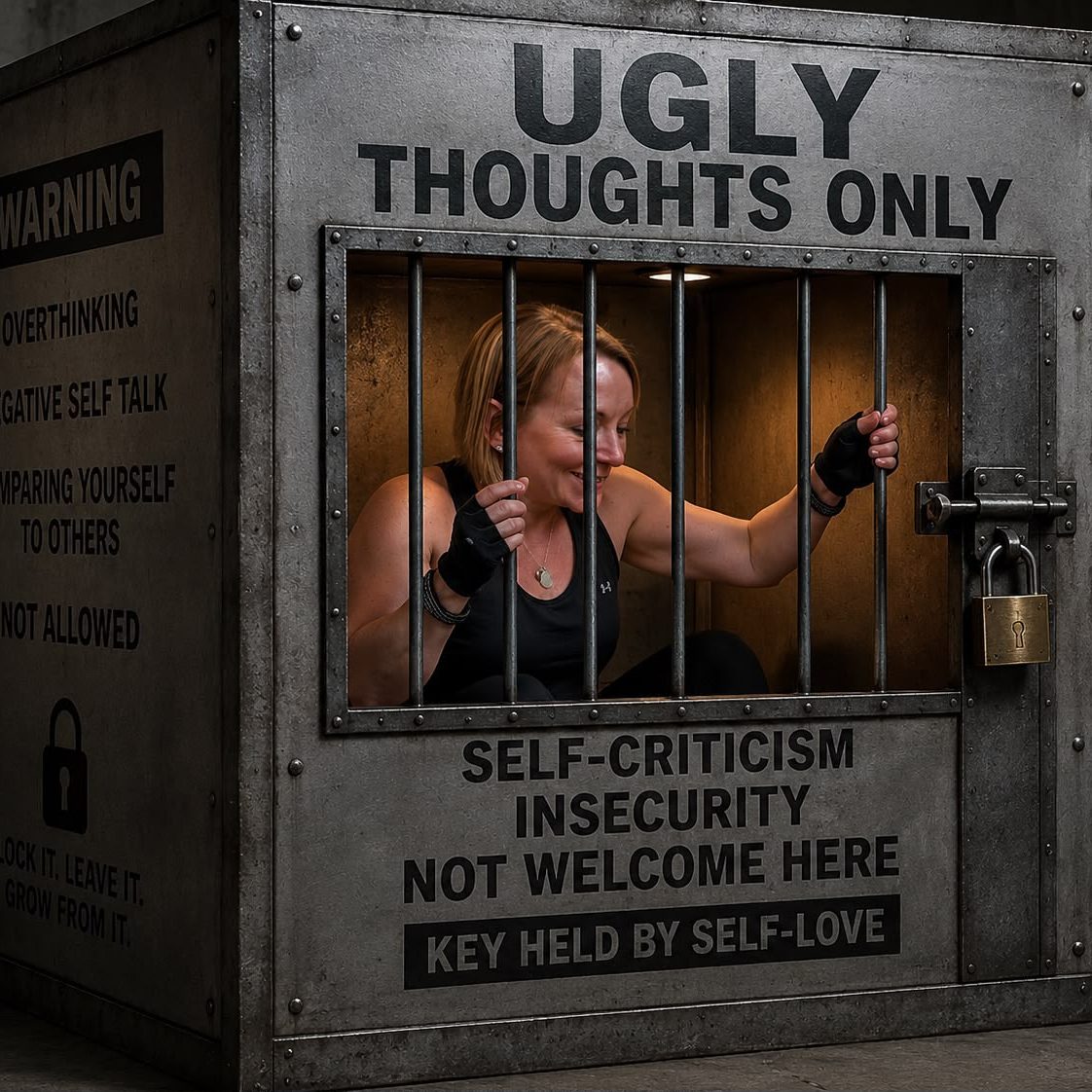
Back Pain: The Hidden Cost We Can No Longer Ignore
Written by Sophie Lamb
For many years, living with back pain has simply been accepted as one of those things.
Something that happens as we get older. Something caused by the jobs we do. Something we just have to put up with.
And for many people, especially those with non-specific low back pain, it can feel as though there is very little that can be done.
But this “it’s just one of those things” attitude is costing us far more than we realise.
Back pain doesn’t just affect the person experiencing it. It impacts families, workplaces, the NHS, and the wider economy. Whichever way you look at it, the true cost of back pain is much higher than most of us appreciate.
Every year, an estimated 31 million working days are lost in the UK due to back, neck, and musculoskeletal problems, with around 12 million of those days linked to low back pain alone. The financial impact runs into billions of pounds when healthcare costs, lost productivity, and disability support are taken into account.
Back pain is also one of the most common reasons people visit their GP, placing significant pressure on NHS services. Yet many cases could potentially be improved through earlier intervention, education, movement, and appropriate rehabilitation.
But while the financial cost is significant, there is an even greater cost: quality of life.
Back pain often causes people to stop exercising because they’re worried movement will make things worse. Over time, this can lead to reduced strength, less movement, weight gain, and even more pain.
People often begin withdrawing from activities they once enjoyed. Hobbies disappear. Social lives become smaller. Everyday tasks become harder. Pain can affect sleep, mood, relationships, and confidence.
For some people, pain simply becomes their new normal.
And it shouldn’t.
So why do so many people continue living with pain?
Often, it comes down to beliefs we’ve held for years.
“It’s just my age.”
“It’s because of my job.”
“Everyone gets bad backs eventually.”
“I don’t have time to get it looked at.”
“I’ll wait until it gets worse.”
Unfortunately, waiting often allows small problems to become bigger ones.
Many people also become fearful of movement, worrying that exercise will make their back pain worse. But modern evidence increasingly shows that, for many people, appropriate movement, exercise, and rehabilitation can significantly improve symptoms.
Pain does not always mean damage.
And back pain does not automatically mean you need to stop moving.
The sooner the cause is identified and the right support is put in place, the better the chance of preventing a short-term issue from becoming a long-term problem.
Our backs face huge demands from modern life. We sit too much, often with poor posture. We spend hours looking down at phones and screens. We move less than previous generations and spend more time being sedentary.
Investing in your back isn’t just about reducing pain today.
It’s about protecting your mobility in years to come. It’s about maintaining your independence as you age. It’s about supporting your mental wellbeing and preserving your quality of life.
As a Level 4 Low Back Pain Specialist, one of the most rewarding parts of my job is helping people realise that pain doesn’t always have to become their normal.
Many people come to me feeling frightened to move, convinced that exercise will make things worse, or believing they simply have to learn to live with their pain.
But with the right education, appropriate exercise, and support, many people can rebuild confidence in their bodies, return to activities they enjoy, and improve their quality of life.
Not every case is straightforward, and there is never a one-size-fits-all approach. But many people are capable of far more movement, strength, and confidence than they realise.
Every day spent living in pain is a day that cannot be given back.
So perhaps the question isn’t:
“Why do people choose to live with pain?”
Maybe the better question is:
“What would your life look like if you didn’t have to?”
And if there is something you can do today to start moving towards that future, why wait another day?
About Sophie
Sophie is a qualified Personal Trainer and Level 4 Low Back Pain Specialist, helping people move with greater confidence, reduce pain, and build strength for long-term health.
Why I Will Never Judge You for Using GLP-1 Medication
Written by Sophie Lamb
Recently, I had a feeling that one of my clients had started using a weight loss injection.
She hadn’t mentioned it to me, but she hadn’t really been coming to the gym and had lost more weight than I’d expect from diet changes alone.
And honestly? That’s okay.
Here’s the thing people often forget about working with a coach or personal trainer, it’s my job to notice changes. I can usually tell when someone isn’t eating enough, when they’re struggling with consistency, or when life has knocked them off track a bit.
That isn’t about judgement. It’s about support.
So, I messaged her to check in and ask how she was doing. She admitted she’d started taking Mounjaro. What struck me most was how nervous she seemed telling me, almost as though she expected criticism or disappointment.
But the truth is, I don’t judge people for using GLP-1 medications.
I believe they absolutely have a place.
What I do have concerns about is the lack of education around how to use them properly and what happens afterwards.
For some people, these medications can be an incredible starting point. They can help reduce appetite, improve blood sugar regulation, and support significant weight loss.
But in my opinion, they work best when combined with proper support around nutrition, movement, and strength training.
Because whilst the weight loss can be impressive, rapid weight loss without resistance training often comes with muscle loss too and that can create problems long term.
One of the biggest reasons I encourage strength training alongside GLP-1 medication is to help protect muscle mass.
When appetite is heavily reduced and calorie intake drops quickly, the body doesn’t just lose fat it can lose muscle too. Preserving muscle is important not only for strength and day-to-day function, but also for long-term health and maintaining results.
Muscle also plays a huge role in metabolism. The more muscle mass we maintain, the more energy the body naturally burns at rest. Losing large amounts of muscle can slow metabolism over time, making it harder to maintain weight loss once the medication stops.
And beyond the numbers on the scales, strength training changes how the body feels and functions.
The medication may help someone become lighter, but resistance training helps build strength, shape, confidence, and capability.
Strength training is also incredibly important for bone health, especially as we age.
Rapid weight loss can impact bone density, particularly in women over 40. Resistance training helps support and maintain bone strength, reducing the risk of osteoporosis and helping people stay stronger for longer.
There are also benefits when it comes to energy, blood sugar regulation, posture, balance, and overall daily function.
Another important conversation we need to have around GLP-1 medications is sustainability.
The medication itself isn’t teaching long-term habits. That’s why education around nutrition, movement, and lifestyle matters so much.
Because if nothing changes beyond the number on the scales, there’s a much higher chance the weight will return once the medication stops.
Building strength, improving fitness, understanding food, and creating realistic routines, those are the things that support long-term success.
I truly believe these medications can help people.
But I also believe people deserve support, education, and guidance alongside them.
And most importantly, they deserve to feel safe speaking honestly about it.
I will never judge someone for using a GLP-1 medication.
Just like I would never judge someone for starting their fitness journey at any stage.
Everybody starts somewhere.
My job is simply to help support that journey in a way that lasts long after the medication has gone.
Functional Fitness: Maybe Not for Today, But for the Long Run
Written by Sophie Lamb
I overheard a conversation the other day that really stuck with me.
Someone was talking about how pointless functional fitness is. That getting “hench” is all that really matters.
And honestly, it surprised me.
Because whilst building muscle and feeling strong is great, there’s a much bigger picture that often gets overlooked.
Functional fitness is about training your body for everyday life.
It’s not about aesthetics, or how your muscles look in a photo. It’s about how your body moves, how capable you feel, and how well you can handle the things life throws at you.
We’re living in a world where quick fixes are everywhere.
Quick weight loss. Quick results.
But at the same time, we’re moving less than ever. We sit more, scroll more, and spend less time using our bodies in a natural way.
And the reality is, none of those quick fixes help you move better in everyday life.
Functional fitness focuses on the movements we do without even thinking, bending, lifting, reaching, pushing, pulling.
These movements use multiple muscle groups at once, rather than isolating just one.
They’re the same movements you use when you carry your shopping, climb the stairs, get up from the sofa, or lift something from the floor.
Things most of us take for granted… until they start to feel harder.
So yes, building muscle and feeling strong is great.
But here’s why functional fitness really matters.
It makes everyday life easier.
Your movements feel smoother, more controlled, and less tiring. The simple things don’t feel like effort.
It improves balance and coordination.
This might not feel important in your 20s or 30s, but it becomes incredibly valuable as you get older. Falls become more serious, recovery takes longer, and things you once brushed off suddenly matter a lot more.
It reduces your risk of injury.
Many injuries don’t happen during intense workouts, they happen during everyday movements. Lifting something awkwardly, overreaching, or losing balance.
Functional training strengthens the smaller stabilising muscles and helps your body move more efficiently and safely.
It builds strength that actually matters.
Not just strength that looks good but strength that supports your body in real life.
And perhaps most importantly, it supports your long-term health and independence.
The stronger and more capable your body is, the more likely you are to stay active, mobile, and independent as you get older.
So yes, being “hench” can feel great.
But don’t overlook what functional fitness can do for you in the long run.
Because it’s not just about how your body looks today…
It’s about how well it supports you for years to come.
Is Cortisol Really the Reason You Can’t Lose Weight?
Written by Sophie Lamb
As a personal trainer, I have a lot of conversations about cortisol.
One of the most common things I hear is:
“It must be my cortisol! that’s why I can’t lose weight.”
And while cortisol can play a role, it’s not the full story.
Cortisol is often blamed, but it’s rarely the only reason someone is struggling with fat loss.
Cortisol is your body’s main stress hormone, produced by the adrenal glands. It’s released throughout the day and actually plays a really important role in keeping you healthy.
It helps regulate your metabolism, control blood sugar levels, support your sleep–wake cycle, reduce inflammation, and it’s what kicks in your “fight or flight” response when you’re under stress.
So cortisol itself isn’t a bad thing, we need it.
Like most things in the body, the issue comes when levels are consistently too high (or too low).
Too little cortisol can leave you feeling fatigued, weak, and low in energy. Too much cortisol, on the other hand, can contribute to things like anxiety, poor sleep, high blood pressure, and yes - weight gain.
So where does this link to fat loss?
When cortisol levels are consistently high, the body is in a more stressed state.
This can encourage the body to store fat, particularly around the abdomen. This is often why cortisol is linked to “belly fat”, especially in women going through menopause.
Cortisol can also affect your appetite. It interacts with hunger hormones, increasing cravings for high-sugar, high-fat foods. The quick “pick me up” options that give you a short-term energy boost.
At the same time, it can make you feel hungrier, even when your body doesn’t actually need more food.
There’s also a knock-on effect when it comes to energy and movement.
When cortisol is elevated, your body increases blood glucose (energy) levels to prepare you for action, this is part of that fight or flight response. But in modern life, we’re often not running or moving. We’re sitting, working, or dealing with stress mentally.
If that extra energy isn’t used, it can be stored.
Another important factor is muscle.
Chronically high cortisol levels can contribute to muscle breakdown over time. And because muscle burns more calories than fat, even at rest, having less muscle can slow your metabolism, making fat loss feel harder.
Sleep is another big piece of the puzzle.
If your cortisol levels are high in the evening, it can disrupt your sleep quality. Poor sleep then affects your energy, your food choices, and your hunger hormones the next day. Often leading to increased cravings and lower motivation.
And that’s where people can get stuck in a cycle that feels really hard to break.
But here’s the key point.
Cortisol itself isn’t the problem.
It’s the lifestyle factors that are driving consistently high cortisol levels that need attention.
Things like:
- eating too little for long periods
- overtraining or doing too many high-intensity workouts
- not allowing enough time for rest and recovery
- poor sleep
- ongoing stress
The good news is, there are simple ways to support your body and keep cortisol levels in a healthier range.
Prioritising 7–9 hours of sleep, getting outside for fresh air, balancing your workouts with proper rest days, and fuelling your body properly all make a big difference.
Managing stress is also key. Whether that’s through walking, breathing exercises, time away from screens, or simply slowing things down when you need to.
Eating regularly and including a good balance of nutrients can also help keep your blood sugar levels stable, which supports your overall energy and mood.
So, is cortisol the reason you can’t lose weight?
No.
It may be one piece of the puzzle, but it’s not the whole picture.
When you focus on supporting your body, through movement, rest, nutrition, and stress management - everything starts to work together.
And that’s when fat loss begins to feel a lot more manageable.
Why Eating Less Isn’t Always the Answer: Understanding BMR and Fat Loss
Written by Sophie Lamb
As a personal trainer, I spend a lot of time talking about nutrition and calories.
One of the most common things I hear is:
“If I eat less, I’ll lose more weight.”
And while that might seem logical, it’s often where the confusion starts.
To really understand fat loss, it helps to understand something called your BMR - your Basal Metabolic Rate.
In simple terms, this is the number of calories your body needs just to keep you alive at rest. Even if you stayed in bed all day, your body would still be working hard behind the scenes - breathing, circulating blood, supporting brain function, maintaining body temperature, and keeping your organs functioning.
All of this requires energy. And that energy comes from calories.
A simple way to think about it is like a car engine that’s always running. Even when the car is parked, the engine still needs fuel to keep everything ticking over. Your BMR works in the same way, it’s the energy your body needs just to stay running, even when you’re not doing anything.
Then everything else - walking, training, daily tasks - is like actually driving the car. That’s where your energy needs increase.
A lot of people think calories are only burned during exercise, but that’s not the case. Your daily calorie burn is made up of several things: your BMR, your daily movement (like walking or doing jobs around the house), your workouts, and even the energy your body uses to digest food.
All of this combined is known as your total daily energy expenditure, or TDEE, and your BMR actually makes up around 60–75% of that total. So even without exercise, your body is burning a significant number of calories every single day.
Your BMR isn’t the same as someone else’s, even if you weigh the same. It’s influenced by things like your age, your muscle mass, your body size, and your hormones. Muscle plays a big role here, the more muscle you have, the more calories your body burns at rest.
This is why two people can look similar on the scales but have completely different calorie needs.
Where this becomes really important is when people try to lose weight by eating as little as possible.
If you consistently don’t eat enough, your body adapts. Instead of burning more energy, it starts to conserve it, slowing things down to protect you. Your body doesn’t know you’re trying to lose weight, it just knows it needs to survive.
Let’s take a simple example.
Sarah decides she wants to lose weight, so she cuts her calories right down to 1,200 a day. At first, the scales might drop, but very quickly she starts to feel exhausted. Her workouts feel harder, her strength drops, and she’s constantly hungry.
Because her body isn’t getting enough fuel, it adapts - slowing her metabolism and conserving energy. Progress stalls, and she feels frustrated, thinking she needs to eat even less.
In reality, the problem isn’t that she’s eating too much, it’s that she’s eating too little to support her body properly.
The goal isn’t to eat as little as possible, it’s to support your body properly.
That means building strength, staying active, getting good quality sleep, and most importantly, eating enough to fuel your body.
Your BMR is your baseline - the minimum your body needs just to function. But your body needs more than that to train well, recover properly, and feel good day to day.
Calories aren’t something to fear. They’re fuel.
When you’re under-fuelled, everything feels harder. When you fuel your body properly, everything works better.
Your body is constantly working for you, every second of every day. The least we can do is give it what it needs.
Fat loss isn’t about eating as little as possible. It’s about understanding your body, fuelling it properly, and creating a sustainable approach that works long term.
Because when you support your body properly, it will work with you - not against you.
Training Through Grief: Moving Your Body When Your Heart Is Heavy
Written by Sophie Lamb
Grief is one of the most powerful emotions we experience as humans.
Most people associate grief with the death of a loved one, but the truth is we grieve many things throughout our lives. The end of a relationship, losing a job, a major life change, or even the loss of the life we thought we would have.
Grief can often feel like a taboo subject. We tend to think of it simply as sadness, but grief is far more complex than that. It can affect us emotionally, mentally, and physically.
What we don’t talk about enough is the impact grief can have on the body.
Grief can disrupt sleep, which in turn affects appetite, food choices, mood, and energy levels. It can create muscle tension and leave us feeling anxious, overwhelmed, or completely drained of motivation. Our nervous system is under enormous stress while we process the emotions that come with grief.
It’s no surprise that workouts can suddenly feel harder than they used to.
During these times, moving your body might be the last thing you feel like doing. And that’s completely understandable.
Sometimes the most helpful thing you can do is adjust your expectations. Exercise doesn’t always have to look the same. On some days it might simply be a short walk, a gentle stretch, or ten minutes of movement just to get out of the house.
On other days, you might feel the need to move more intensely. To lift something heavy or push yourself physically. Sometimes those emotions need an outlet too.
Exercise can’t take grief away, but it can help support us through it.
Movement releases endorphins and serotonin, which can help ease feelings of sadness and anxiety. When everything feels uncertain or overwhelming, exercise can also bring a small sense of structure to the day. It gives the mind a break and helps bring attention back to the body and the present moment.
But perhaps the most important thing during times of grief is learning to be kind to yourself.
Listen to your body. Lower your expectations if you need to. Rest when you need to. And remember that some days, the best thing you can do is simply get through the day.
There can be a strange feeling after a funeral or a big loss that life is supposed to return to normal very quickly. But grief rarely works like that. It can hit like a steam train at the most unexpected moments - weeks, months, or even years later.
Grief isn’t linear, and no two people experience it in the same way. Not even when grieving the same person or the same situation.
Grief changes us. Sometimes temporarily, sometimes forever. It can change our routines, our priorities, and the way we see the world.
But one thing remains constant.
The gym will always be there when you’re ready. Movement will always be there when you need it. And sometimes, the most important thing you can do is simply rest… and eat the cake.
Your Future Self Is Counting on You
Written by Sophie Lamb
I was sitting in a hospital waiting room recently when something struck me.
The walls were covered in posters about balance, bone health, exercise and vitamin D — all things designed to help people stay strong as they get older.
And it made me wonder: how often do we really think about the health of our future selves?
That moment really made me reflect. For generations, the idea of looking after our younger selves in order to protect our older selves hasn’t always been something we’ve focused on.
The waiting room was full of reminders about how important it is to maintain good balance, eat well, stay active, and get enough vitamin D. All simple things that can make a huge difference to our health and independence later in life.
It also made me think about the pressure the NHS is under. So many of the conditions treated every day — falls, fractures, mobility problems — are linked to things like poor balance, weak muscles, and reduced bone density. While not everything can be prevented, it did make me reflect on how much difference small lifestyle choices can make over time.
Someone said something to me recently that really stuck with me:
“We are so important, yet we are always last on our own priority list.”
And sadly, that’s often true.
Life gets busy. Work, family, responsibilities — they all take priority, and our own wellbeing is often the first thing to slip down the list. But when we neglect our health for years, the impact doesn’t just affect us. It can affect the people around us too — our loved ones who may have to care for us, and the healthcare systems that support us.
We’re living longer than ever before, but that doesn’t always mean we’re living well.
Exercise isn’t the only piece of the puzzle, but it is one of the most powerful things we can do for our future health. Regular movement helps improve heart health, strengthen bones, support posture and balance, and make everyday activities easier. It helps keep us independent, mobile, and able to continue doing the things we enjoy.
One of the things I love seeing is younger people in the gym looking after themselves early. They might be training for strength, fitness, or even just the muscles right now — but whether they realise it or not, they’re also investing in their future health.
And the truth is, it’s never too late to start.
The truth is, we can’t stop ourselves from ageing. But we can influence how we age.
Every time we move our bodies, build strength, improve our balance, or take care of our health, we’re investing in the person we’ll be in 10, 20, or 30 years’ time.
Your future self is being shaped by the choices you make today. And the good news is, it’s never too late to start looking after them.
When Was the Last Time You Doubted Yourself?
Written by Sophie Lamb
When was the last time you doubted yourself?
If you’re honest, it was probably more recent than you’d like to admit. Self-doubt has a habit of creeping in when we least expect it. Especially when we’re trying something new, pushing ourselves out of our comfort zone, or stepping into a space where we feel a bit exposed.
Self-belief is often talked about as confidence in our abilities and trusting our own decisions. But it’s not something we either have or don’t have. It comes and goes. Even people who look confident have moments where they question themselves.
These feelings tend to show up during times of uncertainty. Maybe that’s starting a new fitness routine, walking into a gym for the first time, getting back into exercise after a break, or comparing ourselves to people who seem miles ahead. That’s when imposter syndrome kicks in and the inner voice gets louder: What if I can’t do this? What if I’m not good enough?
When that doubt takes hold, negative self-talk isn’t far behind. We start replaying past “failures”, comparing ourselves to others, and worrying far too much about what people might think. Suddenly everything feels harder than it needs to be.
But here’s the thing, we are almost always way harder on ourselves than anyone else is.
Most people aren’t judging us anywhere near as much as we think. In fact, a lot of them are dealing with their own self-doubt too. They just don’t always show it. What looks like confidence from the outside is often just someone choosing to keep going anyway.
The key isn’t getting rid of self-doubt altogether, it’s learning how to handle it when it shows up.
That might mean catching yourself when the negative self-talk starts, reminding yourself how far you’ve already come, or giving yourself credit for simply showing up. Progress doesn’t come from being perfect or confident all the time, it comes from consistency, patience, and being a bit kinder to yourself.
When it comes to fitness (and life in general), confidence is built through action. Every workout you turn up for, every time you try again after a wobble, you’re building trust in yourself. Even on the days it doesn’t feel like it.
So if you’re doubting yourself right now, you’re not failing. You’re human. Self-doubt doesn’t mean you can’t do something. It usually means you’re stretching yourself and growing.
And that’s exactly where the good stuff starts.
The Trainer Who Once Hid in the Back of Class
Written by Sophie Lamb
For a long time, I was the person who tried to blend into the background at the gym.
After major brain and spine surgery at 12, fitness never felt straightforward or accessible. As I got older, I found other ways to move - dancing, nights out, keeping busy, but the gym was somewhere I never really felt I belonged.
In my early twenties, I did what a lot of people did and bought a gym membership. I’d pop in after work, maybe have a swim or walk on the treadmill, but lifting weights felt intimidating and completely out of my comfort zone. The truth? I didn’t feel like I knew what I was doing, and being surrounded by people who looked confident made it even harder.
Years later, I found myself joining another gym. The nerves were still there, so instead of heading onto the gym floor, I signed up for a circuit class. It was busy, which suited me perfectly. I could stand at the back, follow along, and hope no one noticed me too much.
That first class was uncomfortable. Not because it was hard (although it was), but because I felt out of place. My instinct was still to hide, to tell myself the gym wasn’t for people like me.
But I kept going.
With encouragement, patience, and a lot of quiet persistence, things started to change. I still wasn’t confident on the gym floor, but I found something I could do. Then I discovered boxing and something finally clicked.
The turning point came when a close friend got engaged and there was talk of white bikinis in Ibiza. I hadn’t worn a bikini in years, and suddenly I wanted to feel stronger and more confident in my own body.
I asked the one person I trusted most for help, the circuit instructor who’d seen me hiding at the back of class.
We started training away from the gym, taking things slowly. I was starting from scratch: low strength, poor cardio, and very little belief in myself. But I showed up. Once a week became twice a week, and before I realised it, training became part of my life.
I started lifting weights I never thought I’d manage. I took on challenges like Nuclear Rush and the Welsh Three Peaks. Somewhere along the way, the gym stopped feeling intimidating and started feeling like somewhere I belonged.
At the time, I was working in primary schools and became really aware of how intimidating movement and PE can feel for children too. Combined with my love of boxing, it pushed me to train as a gym instructor and later as a personal trainer.
And that’s why I do what I do now.
I’ll never forget what it feels like to hide at the back of a class, to feel unsure, and to believe you don’t belong. My goal is to make sure my clients know the gym is their place and that strength, confidence, and capability are built over time, not expected on day one.
Because everyone deserves to feel like they belong.